
Most HR problems don’t begin with bad intent. They begin with speed.
A manager is trying to cover a shift. Payroll is trying to close the week. An employee needs time off. Everyone’s busy—and a small “we’ll fix it later” decision turns into a complaint, an investigation, or a lawsuit.
2026 is shaping up to be a year where wage-and-hour compliance, leave administration, and culture-driven risk collide. The prevention-first approach is simple: tighten the system before your people and processes get stressed.
What’s changing in 2026—and why it matters
HR isn’t “back office” anymore. It’s operational risk management. Between AI-driven workflow changes, a workforce with significant generational differences, and regulatory compliance shifts, many organizations are moving faster than their policies and training can keep up.
The risk isn’t just regulatory. It’s practical:
- Misclassified roles as duties change
- Inconsistent timekeeping across locations or teams
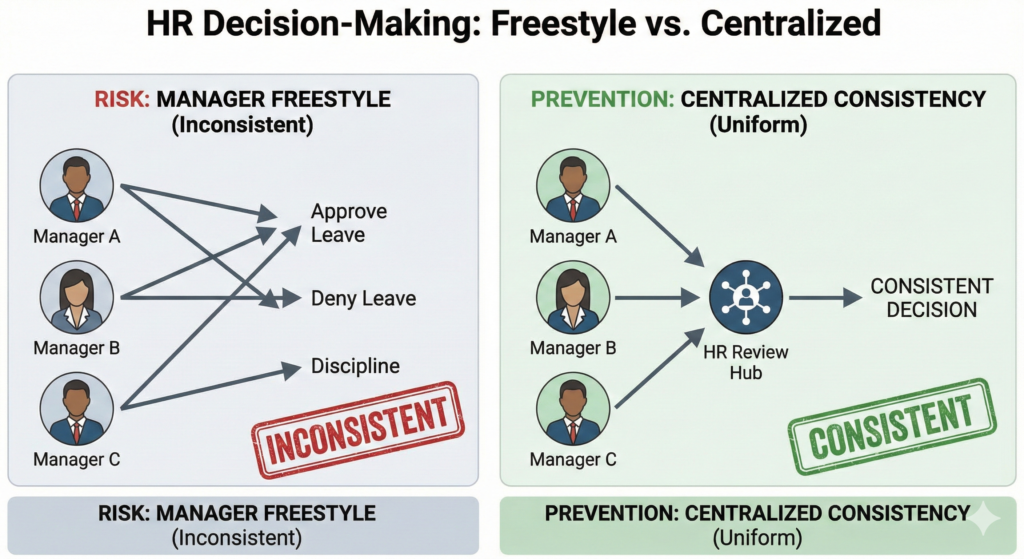
- Leave handled differently depending on the manager
- Discipline decisions that accidentally punish protected leave
How do wage-and-hour problems usually happen?
Most wage-and-hour issues aren’t complicated—they’re based on common misconceptions.
Common real-world failure points
- “We don’t need to track that time, it was just a quick call.”
- “They’re salaried, so overtime doesn’t apply.”
- “They volunteered to skip lunch.”
- “We pay a day rate, so it’s simpler.”
Even small inconsistencies can add up, especially when employees work across sites, supervisors interpret rules differently, or “quick tasks” become routine.
Prevention-first moves that actually help
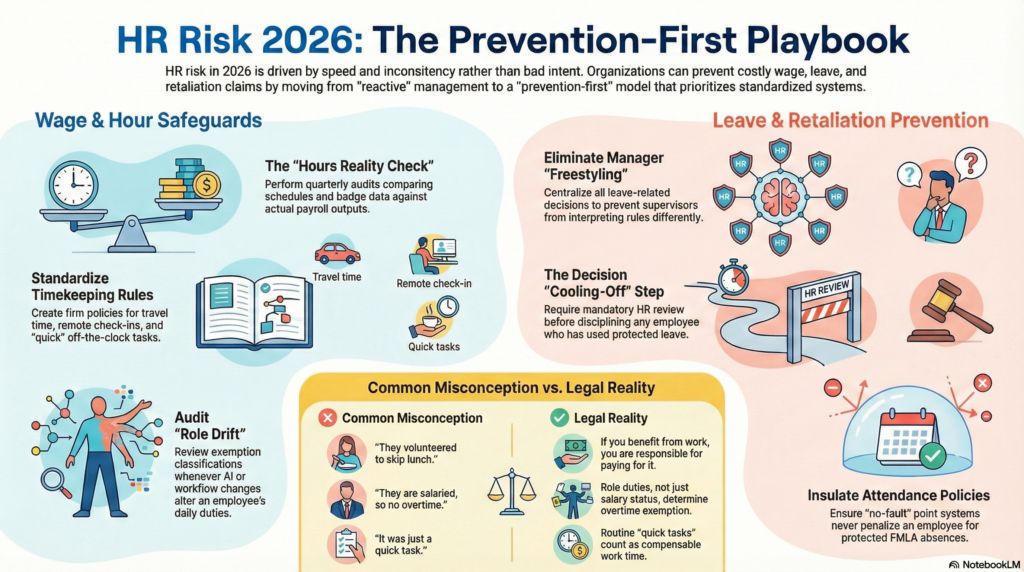
- Run a quarterly “hours reality check.” Compare schedules, access/badge data (if available), and payroll outputs.
- Standardize timekeeping rules for travel time, remote check-ins, training time, and “quick tasks.”
- Audit exemption classifications anytime a role changes.
- Teach managers one principle: If we’re benefiting from the work, we’re responsible for tracking and paying for it.
What counts as FMLA retaliation (and what surprises employers)?
FMLA retaliation is one of the easiest claims to stumble into because it can look like “normal management.”
Leave laws generally prohibit penalizing an employee for using protected leave, discouraging leave, or using leave as a negative factor in discipline, promotion, scheduling, or assignments.
A recognizable scenario
An employee takes approved leave, returns, and suddenly:
- Gets assigned less desirable shifts
- Has hours cut
- Gets written up for “attendance”
- Is passed over because they’re “not reliable”
Even if performance concerns are real, the timing can create risk. The smarter move is to document legitimate reasons clearly and separate leave-related facts from performance decisions.
Prevention-first checklist for FMLA risk
- Centralize leave decisions (don’t let each manager “freestyle”).
- Train supervisors on what not to say (casual comments can be evidence).
- Fix attendance policies so protected leave cannot generate points.
- Use a decision “cooling-off” step: if leave is involved, require HR review before discipline or schedule changes.
How do AI and the gig economy raise HR risk?
AI changes job content faster than job descriptions
When AI takes over repetitive tasks, roles drift. That drift can break exemption assumptions, productivity expectations, and performance measurement fairness.
Prevention-first: update job descriptions and exemption reviews when workflows change—not once a year.
Gig and contractor usage increases classification and control risk
More organizations are leaning on contractors to fill gaps. That can work—until your practices look like employment (you set schedules, provide tools, and control methods).
Prevention-first: align contracts, onboarding, system access, and supervision rules so you don’t accidentally create employee-like control patterns.
Key Takeaway

If you want fewer HR claims in 2026, don’t aim for “perfect compliance.” Aim for consistent decisions. Standardize how you track time, administer leave, and document employment actions—because inconsistency is what turns normal operations into legal exposure.
FAQ
What triggers a wage-and-hour investigation most often?
Common triggers include employee complaints, inconsistent time records, and policies that don’t match real practices (like off-the-clock work or unclear travel time rules).
Can we discipline an employee who is on or recently used FMLA leave?
Yes—but it’s higher-risk. You need clear documentation of legitimate business reasons unrelated to leave, and it’s smart to route decisions through HR review first.
Can a “no-fault” attendance policy apply to FMLA absences?
Not for protected leave. Counting protected leave as points or penalties can create retaliation exposure.
How does AI adoption create HR compliance risk?
AI can shift job duties and expectations quickly, which can lead to misclassification, inconsistent performance standards, and unclear accountability if policies aren’t updated.
What’s one simple step that reduces HR risk fast?
Train managers on a short “red flag” rule: if leave, pay, or protected time off is involved, pause and escalate to HR before making a decision.
HR on a strategic level
Many of the companies I work with don’t have their own HR departments. While I can help employers identify and protect against risk, HR can be used on a strategic level to improve culture, alignment, and create the infrastructure structure needed to grow your business with consistency.
I work with experts in this field that I confidently refer my clients out to. If you’re looking for someone to provide guidance on Human Resources strategy and implementation – please contact me and I’ll be happy to connect you to the right experts.