
Why these events matter
For construction and manufacturing employers, safety observances can do more than fill a calendar. Used well, they can become a practical management tool.
A good safety event gives leadership a reason to pause normal routines, gather employees, and refocus attention on real hazards. That matters because even well-run businesses can drift into autopilot. Training gets stale. Toolbox talks get repetitive. Crews start to normalize risk. Timely observances help interrupt that pattern before it turns into a claim or a serious injury.
Two events worth using this season
The National Stand-down to Prevent Struck-by Incidents gives construction employers a timely way to talk about one of the industry’s most persistent loss drivers. It’s a practical opportunity to revisit equipment movement, dropped-object exposures, work-zone controls, and material handling on active jobs.
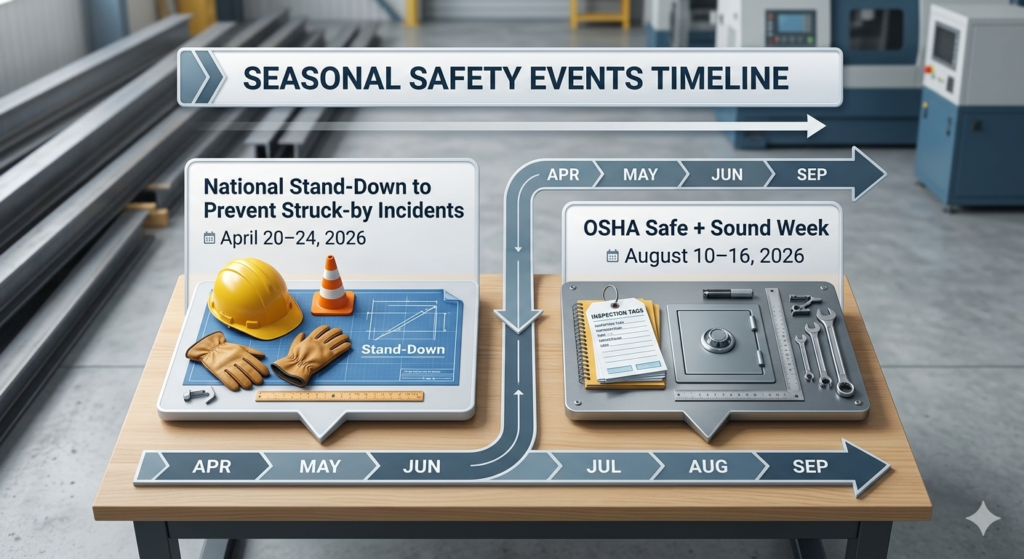
OSHA’s Safe + Sound Week creates a broader framework for both construction and manufacturing employers to reinforce hazard recognition, employee involvement, and follow-through. It’s useful because it doesn’t require inventing a new initiative from scratch. It gives employers a reason to sharpen the one they already have.
How to make the event useful instead of symbolic
The real value isn’t in participating for the sake of participation. It’s in using the event to reinforce a broader system. A stand-down or observance should connect directly to the work people are doing right now.
For construction teams, that might mean reviewing struck-by exposures tied to current site conditions. For manufacturers, it might mean spotlighting one machine or process hazard and walking through safe procedures, common shortcuts, and what good control looks like in the real world.
What employers should do during the event
Keep it practical. Review a recurring loss exposure. Revisit procedures. Gather employee feedback. Document the training. Identify follow-up action items. Make the discussion feel connected to the work, not pasted on top of it.
When employers treat these events as a checkpoint rather than a publicity moment, they tend to get more value out of them. That can mean better communication, better hazard recognition, and better evidence for underwriters that safety is being actively managed year-round.
The takeaway
Seasonal safety events aren’t a complete solution by themselves. But they are a useful trigger. For blue collar employers, that’s often exactly what’s needed to keep safety visible before preventable losses happen.