
Two familiar losses that still cost contractors
Some construction losses are dramatic and immediate. Others build slowly over time. Both can be expensive, and both are often more preventable than they first appear.
Two categories deserve special attention: struck-by incidents and cumulative trauma injuries. They happen differently, but they have something important in common. They tend to show up again and again, and they often drive workers comp costs, downtime, and disruption that could have been reduced with better controls.
Why struck-by incidents still matter so much
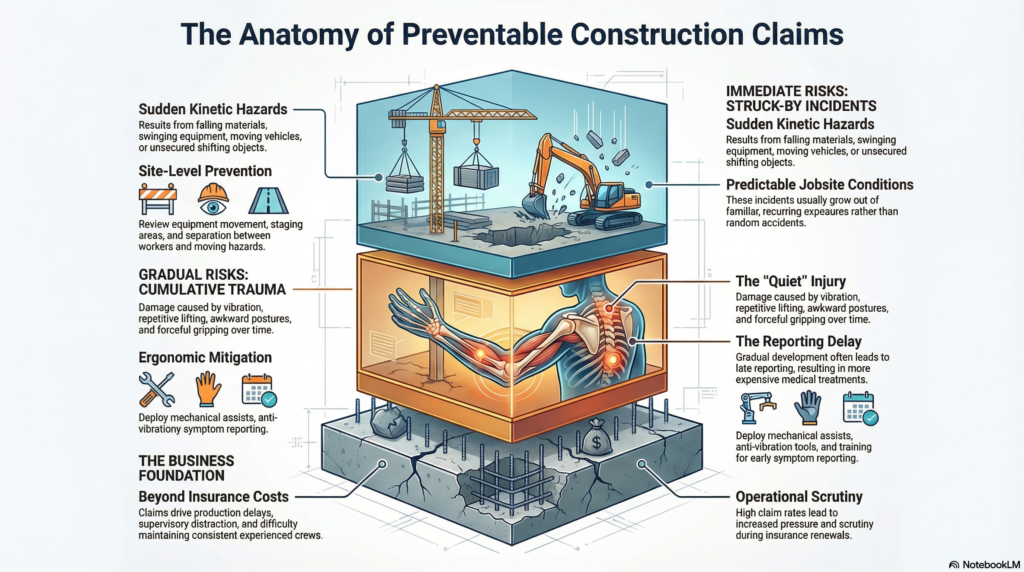
Struck-by exposures are still one of the clearest examples of a recurring construction risk that isn’t getting fully solved. Materials fall. Equipment swings. Vehicles move through tight areas. Objects shift because they weren’t secured the way they should’ve been.
That’s what makes struck-by losses so frustrating. They usually don’t come out of nowhere. They grow out of familiar jobsite conditions that crews and supervisors have seen before.
Why cumulative trauma injuries get underestimated
Cumulative trauma injuries are quieter, but they can be just as costly. These claims often grow out of repetitive lifting, awkward postures, vibration, kneeling, overhead work, and forceful gripping over time.
Because the injury develops gradually, employees may wait too long to report it. By the time the issue becomes a claim, it may already require more treatment, more investigation, and more modified duty than it would have if it had been addressed earlier.
How these injuries affect the business
This isn’t just about insurance. Preventable claims create lost time, production delays, supervisory distraction, scheduling pressure, and more scrutiny at renewal. They can also make it harder to keep crews consistent when experienced workers are sidelined.
That’s why the right question isn’t just, ‘What happened?’ It’s also, ‘What work patterns keep leading us back here?’
What contractors should do next
For struck-by exposures, start with current site conditions. Review equipment movement, dropped-object prevention, staging, and separation between workers and moving hazards. Make the conversation specific to the jobs in progress.
For cumulative trauma injuries, look at task design. Better tools, mechanical assists, adjustable work platforms, anti-vibration equipment, and training on posture and early symptom reporting can all help. Contractors don’t need a perfect program to improve results. They do need to focus on the losses that keep repeating.